
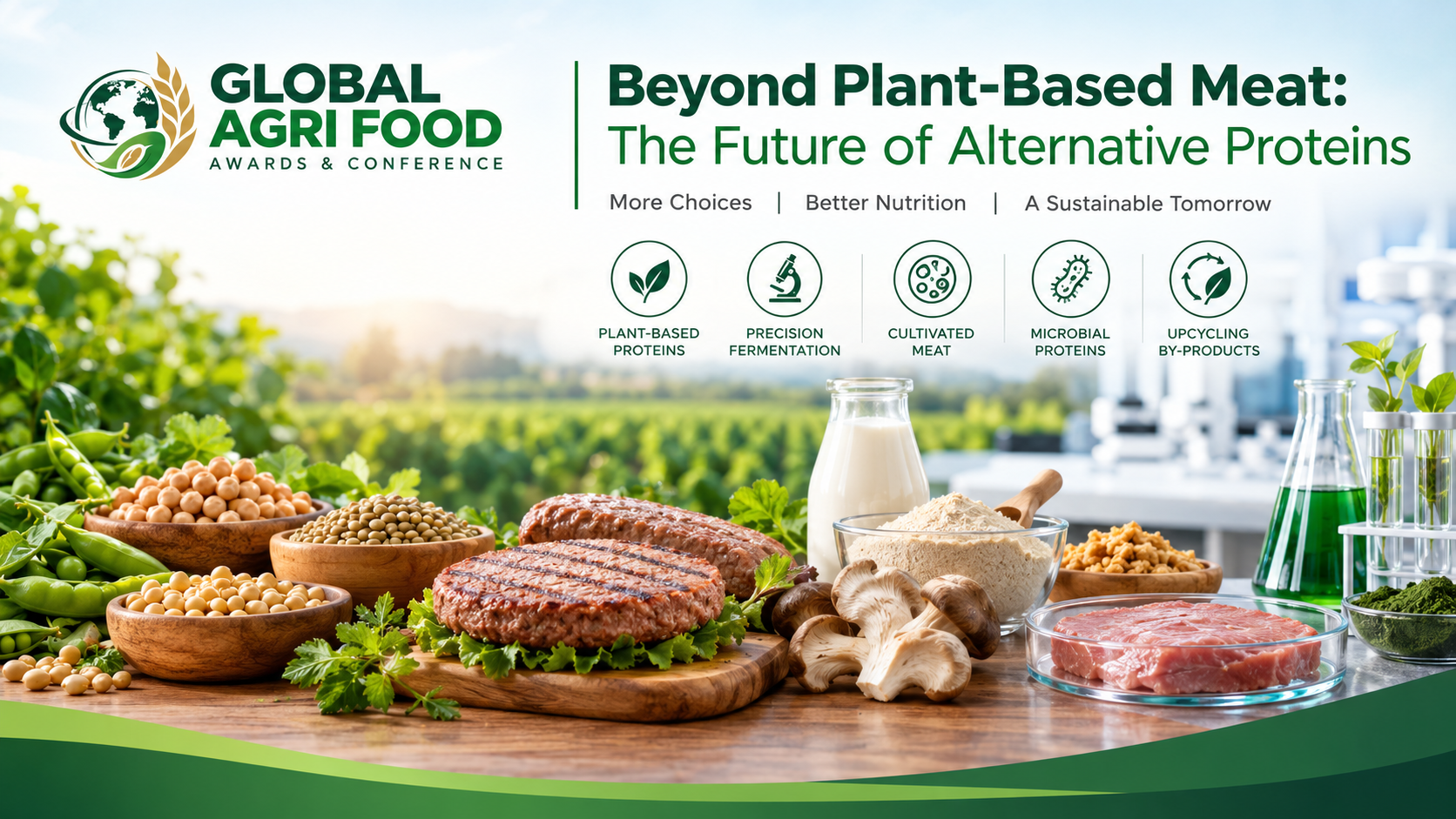
Beyond Plant-Based Meat: The Future of Alternative Proteins
The global food industry is entering a new era of innovation as companies explore alternative sources of protein to meet changing consumer needs, improve food system resilience, and create more sustainable food production systems. While plant-based meat products have attracted significant attention in recent years, the alternative protein sector is expanding into new areas, including precision fermentation, cultivated meat, microbial proteins, and ingredients derived from agricultural by-products.
These developments are creating opportunities for food manufacturers, agritech startups, investors, researchers, and agricultural producers to rethink how protein is produced and delivered to consumers.
As demand for nutritious and affordable food continues to grow, alternative proteins could become an important part of the future food system. However, their long-term success will depend on affordability, taste, nutritional quality, production efficiency, regulatory approval, and consumer acceptance.
1. Why Alternative Proteins Are Gaining Attention
Protein plays a vital role in human nutrition, supporting muscle development, tissue repair, and overall health. Traditional sources include meat, fish, eggs, dairy products, legumes, nuts, and other plant-based foods.
Today, the food industry is exploring additional ways to produce protein in response to growing food demand, resource constraints, supply chain vulnerabilities, and changing dietary preferences.
Alternative proteins offer several approaches. Some use plants as their primary ingredients, while others rely on microorganisms, fermentation technologies, or animal cells cultivated under controlled conditions.
The goal is not necessarily to replace conventional protein sources entirely. Instead, alternative proteins can expand consumer choice, diversify food supply chains, and create new opportunities for food innovation.
2. Plant-Based Proteins Continue to Evolve
Plant-based proteins remain one of the most established segments of the alternative protein industry. Ingredients such as soybeans, peas, lentils, chickpeas, and other legumes are widely used to develop protein-rich foods.
Food manufacturers are working to improve the taste, texture, nutritional composition, and versatility of these products. Processing technologies, including extrusion, can help create fibrous textures similar to those found in meat, while new ingredient formulations can improve flavour and cooking performance.
However, consumers increasingly expect more than a meat-like appearance. They also consider ingredient quality, protein content, price, and overall nutritional value.
This creates opportunities for companies to develop a broader range of products, including plant-based dairy alternatives, protein-rich snacks, convenient meals, and foods made from traditional legumes.
For agricultural producers, growing demand for plant proteins could create new markets for protein crops and encourage investment in local processing infrastructure.
By connecting farmers with food manufacturers, agricultural businesses can help strengthen supply chains and increase the value of locally produced ingredients.
3. Precision Fermentation: A New Approach to Food Ingredients
Precision fermentation is emerging as a promising technology for producing specific proteins and other functional ingredients.
The process uses microorganisms, such as yeast or fungi, as production systems to create targeted substances under controlled conditions. Depending on the application, these ingredients may include proteins, enzymes, and other compounds used in food manufacturing.
One area of interest is the production of dairy-related proteins without relying on conventional dairy farming as the direct production method. These ingredients may help food manufacturers develop products with functional characteristics similar to those of traditional dairy ingredients.
Precision fermentation could also support the production of specialised ingredients for improving texture, stability, nutritional composition, and processing performance.
However, commercial success depends on production costs, manufacturing capacity, regulatory approval, and consistent product quality. Companies must also demonstrate food safety and establish consumer confidence.
As fermentation infrastructure develops, partnerships between biotechnology companies, food manufacturers, ingredient suppliers, and investors will be important for bringing these innovations to wider markets.
4. Cultivated Meat and New Production Methods
Cultivated meat is produced by growing animal cells in controlled environments rather than raising an entire animal for meat production.
The technology is being explored as a potential additional method of producing meat, with researchers and companies working to improve cell growth, production systems, and product quality.
One of the main challenges is scaling production economically. Cultivated meat requires specialised equipment, carefully controlled conditions, and suitable growth media. These requirements can make production expensive and technically complex.
Companies must also demonstrate that their products meet applicable food safety standards and obtain the necessary regulatory approvals before selling them in individual markets.
Consumer acceptance presents another challenge. People may have questions about how cultivated meat is produced, how it compares with conventional meat, and whether it offers meaningful benefits.
Although cultivated meat is still developing commercially, continued research could help clarify its potential role in future food systems.
5. Microbial Proteins: Exploring the Potential of Microorganisms
Microbial proteins, sometimes referred to as single-cell proteins, are derived from microorganisms such as bacteria, yeast, fungi, and algae.
These organisms can be cultivated under controlled conditions and processed into ingredients for food or animal feed, depending on the organism, production method, and intended application.
One area of interest is the ability to produce certain microbial proteins in facilities that require less conventional agricultural land than some traditional protein production systems. Actual resource requirements vary according to the technology, energy source, feedstock, and production process.
Microbial protein development also creates opportunities to investigate alternative feedstocks and improve the use of available resources.
For example, some processes can use agricultural or food-processing by-products as inputs, provided those materials meet the technical and safety requirements of the production system.
The sector still faces challenges involving production economics, ingredient functionality, regulatory requirements, and consumer familiarity. Nevertheless, microbial proteins represent an important area of research for food and biotechnology companies.
6. Turning Agricultural By-Products Into Valuable Protein Ingredients
Food production generates substantial quantities of by-products, including crop residues, oilseed meals, fruit-processing leftovers, and materials from grain processing.
Some of these materials already have established uses in animal feed or other industries. Others may offer opportunities for further processing into higher-value ingredients.
Food technology companies are investigating ways to recover useful nutrients and functional compounds from suitable agricultural by-products.
Depending on the raw material and processing method, these ingredients may be used in protein-rich foods, feed formulations, or other applications.
This approach connects alternative protein innovation with the principles of a circular economy. Instead of treating every by-product as waste, businesses can explore whether it can be converted into a useful resource.
However, not all agricultural residues are suitable for food production. Safety, contamination risks, nutritional composition, processing costs, and regulatory requirements must be carefully evaluated.
Successful projects will depend on strong coordination between farmers, processors, biotechnology companies, and food manufacturers.
7. The Role of Artificial Intelligence in Alternative Protein Development
Artificial intelligence is creating new opportunities to improve research and development across the alternative protein industry.
Developing a new protein ingredient often involves testing different formulations, processing conditions, and production methods. These activities can require considerable time and resources.
AI and data analytics can help researchers analyse experimental results, identify patterns, and prioritise promising approaches. Depending on the application, these tools may support ingredient discovery, fermentation optimisation, process monitoring, and product formulation.
For example, machine learning models may help researchers assess how changes in fermentation conditions affect productivity. Data-driven formulation tools may also help food developers evaluate ingredient combinations that influence texture, flavour, or nutritional characteristics.
AI can additionally support production planning and quality control when reliable data are available.
Nevertheless, digital tools do not eliminate the need for laboratory experiments, food safety assessments, or industrial testing. Their value depends on the quality of the data, the suitability of the models, and the ability to validate results under real production conditions.
Combining biotechnology expertise with digital innovation could help companies develop alternative protein products more efficiently.
8. Challenges Facing the Alternative Protein Industry
Despite growing innovation, alternative proteins face several barriers that could influence the pace of adoption.
Production costs
Some alternative protein technologies require expensive equipment, specialised facilities, and energy-intensive processes. Lowering production costs will be important for competing in mainstream food markets.
Taste and texture
Consumers expect foods to deliver satisfying flavour, texture, and cooking performance. Improving these characteristics remains a priority for many product developers.
Regulatory approval
Novel ingredients and production methods must comply with the food safety and regulatory requirements of the markets in which they are sold. Approval processes can vary significantly between countries.
Consumer trust
Clear communication about ingredients, manufacturing processes, nutrition, and safety can help consumers make informed decisions.
Infrastructure and scaling
Moving from laboratory research to commercial manufacturing requires reliable facilities, technical expertise, supply chain coordination, and sufficient investment.
Access to suitable raw materials
Plant-based and fermentation-based production systems depend on consistent supplies of appropriate ingredients or feedstocks. Agricultural production, processing capacity, and transport infrastructure can all affect commercial viability.
Addressing these challenges will require cooperation among researchers, food manufacturers, investors, regulators, agricultural businesses, and technology providers.
9. Investment Opportunities in Alternative Proteins
The alternative protein sector offers opportunities across several parts of the value chain.
Investors and businesses can explore ingredient development, fermentation infrastructure, specialised processing equipment, food formulation, quality testing, and distribution.
There are also opportunities in supporting industries, including agricultural feedstock production, cold-chain logistics, food safety technology, and digital manufacturing systems.
For agritech startups, alternative proteins create potential pathways to connect agricultural innovation with the food manufacturing sector. Companies developing improved protein crops, precision agriculture tools, or systems for processing agricultural by-products may find opportunities through partnerships with food businesses.
However, investment decisions should consider technological maturity, production economics, regulatory requirements, market demand, and the time required to achieve commercial scale.
Not every promising laboratory innovation will become a viable consumer product. Businesses that combine technical performance with a clear commercial strategy will be better positioned to establish sustainable operations.
10. What the Future Holds for Alternative Proteins
The future of alternative proteins is likely to involve a diverse mix of technologies rather than one universal solution.
Plant-based ingredients may continue to serve established consumer markets, while precision fermentation and microbial proteins could expand the range of ingredients available to food manufacturers. Cultivated meat may develop further as companies work to overcome technical and economic barriers.
At the same time, conventional agriculture will remain essential to global food systems. Farmers will continue to supply crops, legumes, oilseeds, and other raw materials that support both traditional food production and emerging protein industries.
The strongest opportunities may emerge when agricultural production, biotechnology, food processing, and digital innovation work together.
For example, improved protein crops could supply specialised ingredients, agricultural by-products could provide suitable processing inputs, and AI-driven systems could help manufacturers monitor quality and optimise production.
The pace of development will depend on scientific progress, consumer demand, public policy, investment, and the ability of businesses to deliver safe, affordable, and appealing products.
Conclusion
Alternative proteins are expanding the possibilities for producing food and developing new ingredients. From plant-based foods and precision fermentation to microbial proteins and cultivated meat, innovation is creating new opportunities across agriculture, biotechnology, and food manufacturing.
However, long-term success will require more than scientific breakthroughs. Companies must address production costs, improve product quality, comply with regulatory requirements, and build consumer trust.
For agricultural producers, food processors, agritech companies, and investors, the sector presents opportunities to develop new products, strengthen supply chains, and create additional value from agricultural resources.
The future of protein will not depend on a single technology. It will be shaped by collaboration, responsible innovation, and the ability to deliver practical solutions that meet the needs of both consumers and the global food system.
Global Agri Food Awards & Conference 2027
The Global Agri Food Awards & Conference (GAFC) brings together agricultural innovators, agritech companies, food manufacturers, investors, and industry leaders to explore emerging technologies and opportunities shaping the future of agriculture and food.
As alternative proteins gain attention, collaboration across farming, biotechnology, food processing, and investment will be increasingly important in turning new ideas into commercially viable solutions.
GAFC provides a platform for industry professionals to exchange insights, explore partnerships, and discuss innovations across the global agri-food value chain.
Upcoming editions:
Dubai, UAE: 13–14 April 2027
Amsterdam, Netherlands: 14–15 September 2027
Learn more: globalagrifoodconference.com