
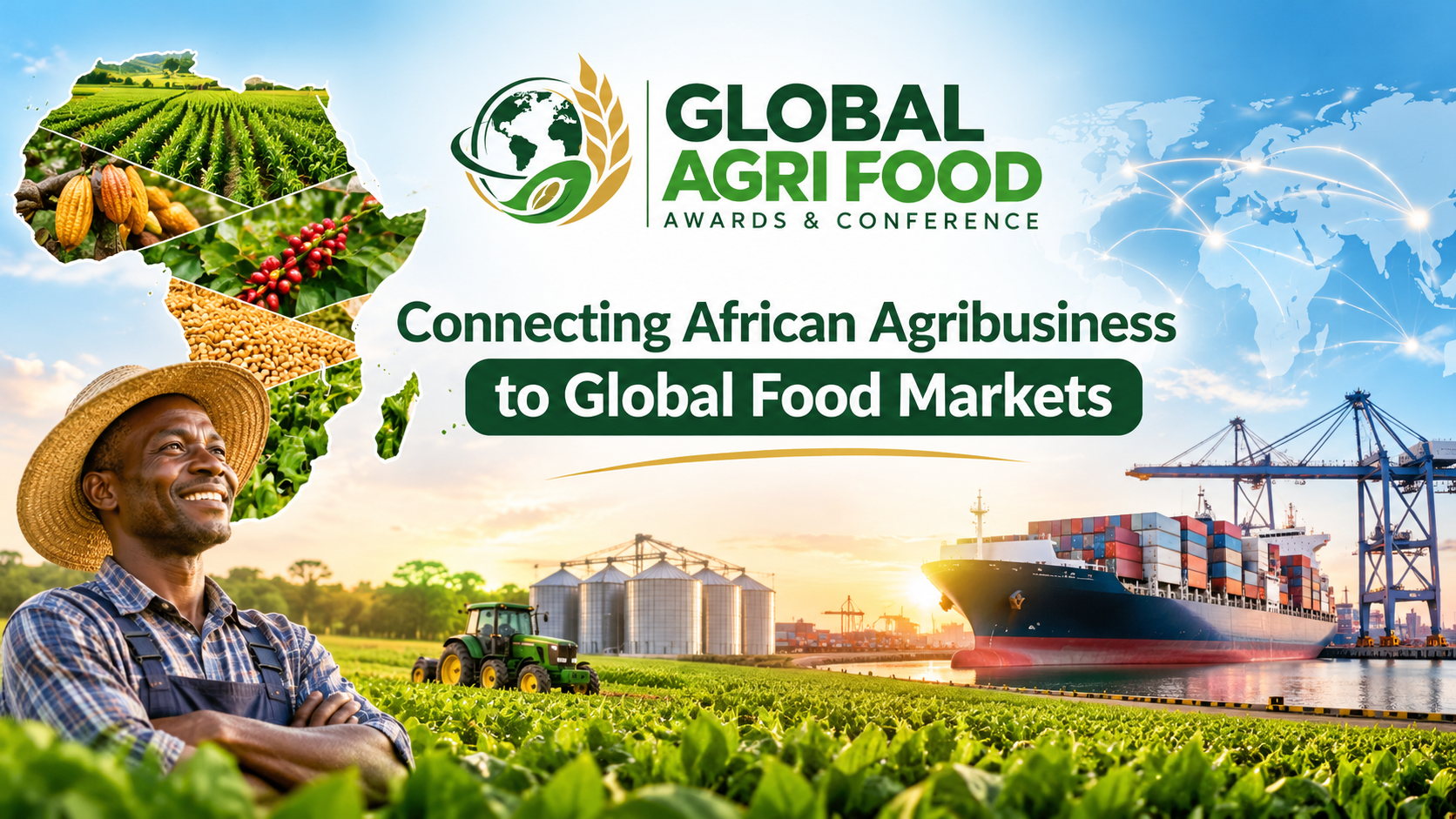
Connecting African Agribusiness to Global Food Markets
Introduction
Africa has enormous potential to become a major contributor to the global food economy. With vast agricultural land, diverse climates, a growing population, and a strong base of agricultural producers, the continent is well positioned to expand its role in international food production and trade.
Across Africa, agribusinesses are producing a wide range of products, including cocoa, coffee, tea, cashew nuts, fruits, vegetables, grains, oilseeds, and processed foods. These products serve both local consumers and international markets. However, connecting African agricultural businesses with global food markets requires more than production capacity. It demands reliable infrastructure, quality standards, modern technology, investment, market access, and stronger international partnerships.
As global demand for diverse, sustainable, and traceable food products continues to evolve, African agribusinesses have an important opportunity to strengthen their competitiveness and reach new customers worldwide.
1. Africa's Growing Role in Global Food Trade
Agriculture remains a major part of many African economies, supporting livelihoods, employment, and rural development. Countries across the continent have established strong agricultural industries, with products that are in demand internationally.
West Africa is recognised for cocoa, cashew nuts, and tropical produce. East Africa has growing export industries in coffee, tea, flowers, fruits, and vegetables. Southern Africa contributes grains, citrus fruits, wine, and processed agricultural products, while North African countries export products such as citrus, olives, dates, and vegetables.
Despite this diversity, many African agribusinesses have not yet reached their full international market potential. Improving access to buyers, distributors, retailers, food manufacturers, and global supply chains can help unlock new commercial opportunities.
2. Strengthening Agricultural Supply Chains
Efficient supply chains are essential for connecting agricultural producers with international markets. However, many businesses across Africa face challenges related to transportation, storage, logistics, and distribution.
Limited cold-storage facilities, inadequate rural road networks, port congestion, and high transportation costs can affect product quality and increase export expenses. These challenges are particularly important for perishable products such as fresh fruits, vegetables, flowers, and dairy products.
Investment in modern warehouses, refrigerated transportation, processing facilities, and logistics infrastructure can reduce post-harvest losses and improve delivery reliability.
Stronger cooperation between farmers, cooperatives, processors, logistics companies, exporters, and international distributors can also create more efficient supply chains.
3. Meeting International Quality and Food Safety Standards
Access to global food markets depends heavily on product quality, consistency, and compliance with international regulations.
Importers and retailers increasingly expect agricultural products to meet specific food safety, packaging, labelling, and traceability requirements. Depending on the destination market and product category, businesses may need to comply with standards covering pesticide residues, hygiene, handling, processing, and sustainability.
For smaller producers and agribusinesses, meeting these requirements can be challenging because certification, testing, and quality-control systems require investment and technical knowledge.
Training programmes, accessible certification services, improved laboratory facilities, and partnerships with international quality-assurance organisations can help businesses meet these expectations.
By strengthening quality management, African exporters can build buyer confidence and develop long-term relationships with international customers.
4. Digital Technology Is Expanding Market Access
Digital transformation is creating new opportunities for African agribusinesses to connect with global markets.
Digital trading platforms, e-commerce solutions, mobile applications, and online business networks can help producers identify potential buyers, compare market prices, manage transactions, and access supply-chain information.
Technologies such as satellite monitoring, artificial intelligence, digital traceability, and farm management software can also improve production planning and product consistency.
For exporters, digital traceability systems can provide information about where products originate, how they are cultivated, and how they move through the supply chain. This is increasingly valuable for buyers seeking transparency and responsible sourcing.
Expanding digital infrastructure and improving access to technology training will be important in ensuring that small and medium-sized agribusinesses can benefit from these developments.
5. The Importance of Regional and International Trade Partnerships
Trade partnerships play a central role in expanding market access. African agribusinesses can benefit from stronger connections with international food companies, supermarket chains, distributors, processors, investors, and logistics providers.
Regional cooperation is equally important. The African Continental Free Trade Area (AfCFTA) provides a framework for strengthening trade between African countries by reducing trade barriers and encouraging greater economic integration.
Improved regional trade can help businesses expand their customer base, develop larger markets, and build the scale needed to compete internationally.
At the same time, international partnerships can provide access to advanced technologies, technical expertise, investment, and established distribution networks.
Building these relationships requires consistent communication, market knowledge, transparent business practices, and a clear understanding of international buyer requirements.
6. Investment in Processing and Value Addition
Exporting raw agricultural commodities can generate income, but processing products locally can create additional economic value.
For example, instead of exporting only raw cocoa beans, businesses can invest in cocoa processing and chocolate production. Coffee producers can develop roasting and packaging operations, while fruit producers can explore juice production, drying, freezing, and other processing opportunities.
Value addition can create employment, strengthen local industries, diversify export revenues, and improve the competitiveness of agricultural businesses.
However, developing processing capacity requires investment in machinery, skilled workers, energy infrastructure, packaging, quality control, and market research.
Public-private partnerships and investment from international development organisations, financial institutions, and private investors can help accelerate this transformation.
7. Sustainability and Responsible Sourcing
Sustainability is becoming an increasingly important factor in global food purchasing decisions.
International buyers are paying closer attention to how agricultural products are grown, processed, transported, and sourced. Environmental protection, responsible water use, soil health, biodiversity, labour conditions, and supply-chain transparency are all gaining importance.
African agribusinesses that adopt sustainable practices can strengthen their position in markets where responsible sourcing is a priority.
Regenerative agriculture, climate-smart farming, efficient irrigation, agroforestry, and improved soil management can contribute to long-term productivity while reducing environmental pressure.
Businesses that can demonstrate measurable sustainability outcomes may also become more attractive to investors, retailers, and international food companies.
8. Supporting Smallholder Farmers and Local Agribusinesses
Smallholder farmers are essential to agricultural production across much of Africa. Yet many face difficulties accessing finance, modern equipment, training, reliable markets, and international buyers.
Connecting smallholder farmers to global value chains requires inclusive business models that create opportunities for smaller producers while maintaining consistent quality and supply.
Cooperatives, contract farming arrangements, farmer organisations, and partnerships with agricultural companies can help farmers access technical support and more reliable markets.
Financial inclusion is also important. Access to affordable credit, insurance, digital payments, and investment can help farmers improve productivity and manage business risks.
When smallholder farmers are integrated into stronger value chains, the benefits can extend beyond individual businesses to rural communities and national economies.
9. Overcoming Barriers to Global Market Access
Despite the opportunities, African agribusinesses continue to face several challenges when entering international markets.
These include:
High transportation and export costs.
Limited access to affordable financing.
Complex customs procedures and trade regulations.
Inconsistent product quality and supply volumes.
Insufficient cold-chain and storage infrastructure.
Limited market information and international buyer connections.
Challenges meeting certification and traceability requirements.
Addressing these barriers requires coordinated efforts from governments, private companies, financial institutions, industry associations, technology providers, and international development partners.
Policies that support trade facilitation, infrastructure development, agricultural financing, and export-oriented business growth can help create a more competitive environment.
10. The Future of African Agribusiness in Global Markets
The future of African agribusiness will depend on its ability to combine agricultural productivity with innovation, investment, and international collaboration.
Emerging technologies, improved infrastructure, stronger regional trade, and growing demand for sustainable food products create significant opportunities for the continent.
African businesses can strengthen their international presence by investing in value addition, improving quality standards, adopting digital solutions, and developing long-term relationships with global buyers.
The next phase of agricultural growth should focus not only on exporting more products but also on building competitive, resilient, and sustainable food businesses that generate greater value within Africa.
Conclusion
Connecting African agribusiness to global food markets is an important opportunity for economic growth, agricultural development, and international cooperation.
By strengthening supply chains, improving quality standards, adopting digital technologies, attracting investment, and building strategic partnerships, African agricultural businesses can expand their reach and compete more effectively in international markets.
The opportunity is not limited to large exporters. Smallholder farmers, cooperatives, startups, processors, and emerging agritech companies all have a role to play in building stronger agricultural value chains.
With the right investment, infrastructure, and collaboration, Africa can strengthen its position as a reliable and competitive contributor to the global food system.
Join the Global Agri Food Awards & Conference 2027
The Global Agri Food Awards & Conference 2027 brings together agricultural leaders, agribusinesses, food producers, agritech innovators, investors, researchers, policymakers, and industry professionals to explore opportunities, exchange knowledge, and build meaningful international partnerships.
Be part of the conversations shaping the future of agriculture and food systems.
2027 Conference Editions:
Dubai, UAE | 13–14 April 2027
Amsterdam, Netherlands | 14–15 September 2027
Explore the conference: https://globalagrifoodconference.com/