
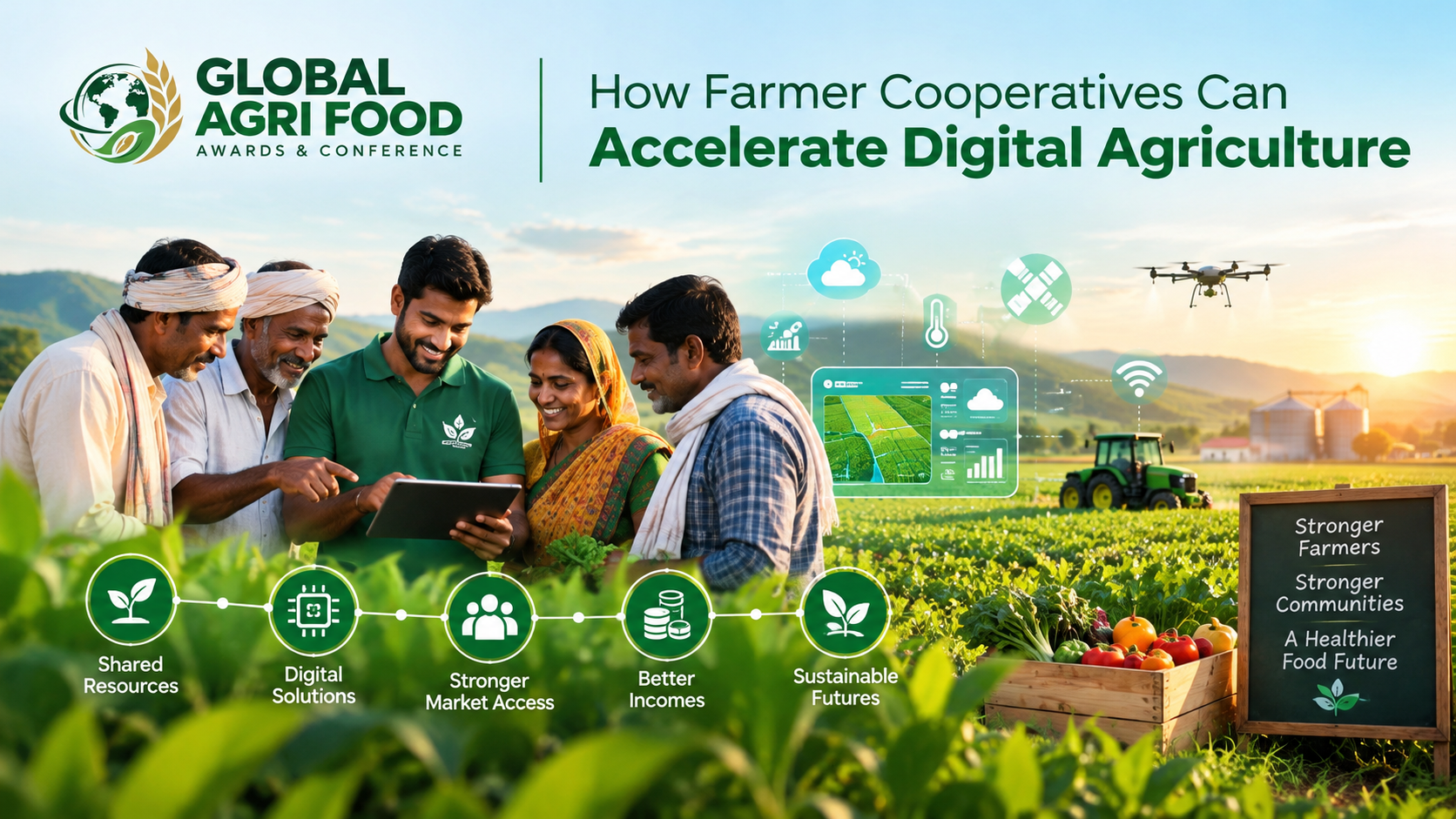
How Farmer Cooperatives Can Accelerate Digital Agriculture
Agriculture is undergoing a significant digital transformation, with technologies such as artificial intelligence (AI), precision farming, satellite monitoring, and digital marketplaces changing how farmers manage their operations. However, access to these technologies remains a challenge for many smallholder farmers, particularly in emerging markets.
High equipment costs, limited digital literacy, unreliable connectivity, and restricted access to financing can prevent individual farmers from adopting modern agricultural solutions. Farmer cooperatives offer a practical way to overcome some of these barriers by bringing producers together, pooling resources, and creating opportunities to adopt technology collectively.
By combining the strength of collective action with digital innovation, farmer cooperatives can help make agriculture more productive, competitive, and sustainable.
What Are Farmer Cooperatives?
Farmer cooperatives are organisations established by farmers who work together to achieve shared economic and operational goals. Members may collaborate to purchase agricultural inputs, access machinery, market their produce, share knowledge, or negotiate better terms with buyers.
Traditionally, cooperatives have helped farmers reduce costs and strengthen their bargaining power. Today, they can also serve as an important link between rural communities and digital agriculture.
Rather than requiring every farmer to invest independently in expensive technology, cooperatives can coordinate access to shared digital platforms, agricultural machinery, data services, and professional expertise.
This collective approach can make modern farming tools more accessible, especially for producers operating on small plots of land or with limited financial resources.
1. Making Agricultural Technology More Affordable
One of the biggest obstacles to digital agriculture is the cost of adopting new technologies.
Drones, soil sensors, automated irrigation systems, farm management software, and precision spraying equipment can require significant initial investment. For individual smallholder farmers, these costs may be difficult to justify.
Cooperatives can help by sharing these expenses among multiple members.
For example, a cooperative could purchase a drone and offer crop-monitoring services to its members. Instead of every farmer buying equipment, members could pay a smaller service fee to access aerial field assessments.
Similarly, cooperatives can invest in shared soil-testing equipment, digital weighing systems, weather monitoring stations, or machinery equipped with precision farming technology.
This model offers several potential benefits:
Lower individual investment requirements.
Better utilisation of expensive equipment.
Access to technical expertise and maintenance services.
More consistent agricultural monitoring across member farms.
Greater opportunities for farmers to test technologies before making individual investments.
Shared ownership and service-based models can help close the technology gap between smallholder producers and larger commercial farms.
2. Improving Access to Digital Farming Platforms
Digital farming platforms can provide farmers with information about weather conditions, crop management, soil health, input requirements, and market opportunities.
However, downloading an application is only the first step. Farmers must also understand how to use the platform, interpret its recommendations, and apply the information to their own farming conditions.
Cooperatives can act as a bridge between technology providers and agricultural communities.
They can introduce digital tools to members, organise training sessions, help farmers register on platforms, and provide support when users encounter technical difficulties.
For example, a cooperative might use a digital farm management platform to maintain planting records, monitor crop performance, and track input usage across member farms. This information could help members compare results, identify challenges, and improve their planning.
Cooperatives can also help technology companies understand the needs of farmers, allowing them to develop more practical products and services.
For digital agriculture to succeed, platforms must be affordable, easy to use, available in relevant local languages, and suitable for the conditions in which farmers operate.
3. Strengthening Market Access Through Digital Connections
Access to reliable markets is a major concern for farmers. Even when production is successful, producers may struggle to find buyers, negotiate competitive prices, organise transportation, or meet the volume requirements of larger purchasers.
Farmer cooperatives can address some of these challenges by combining the produce of their members and coordinating sales.
Digital marketplaces and supply chain platforms can strengthen this model by connecting cooperatives with food processors, retailers, exporters, wholesalers, and agricultural commodity buyers.
Through digital channels, cooperatives may be able to:
Share information about available produce and expected harvest volumes.
Identify potential buyers and compare commercial opportunities.
Coordinate collection, storage, and transportation.
Maintain digital transaction and delivery records.
Communicate quality specifications and delivery requirements.
Consider a cooperative whose members grow cassava. Individually, each farmer may produce quantities too small to attract a large industrial processor. By aggregating production and coordinating deliveries, the cooperative may be better positioned to negotiate supply agreements.
Digital records can further help the cooperative demonstrate its capacity to deliver consistent volumes and improve communication with buyers.
However, successful market access requires more than online visibility. Product quality, reliable logistics, transparent pricing, payment arrangements, and trust between trading partners remain essential.
4. Using Data to Improve Farm Productivity
Agricultural data can help farmers understand which practices are working, where resources are being wasted, and how production can be improved.
When cooperatives encourage members to maintain farm records, they can develop a broader understanding of production trends across their communities.
For example, records of seed varieties, fertiliser use, planting dates, irrigation practices, and crop yields can help identify differences in performance.
When combined with soil tests, weather information, or crop-monitoring data, these records can support better-informed agricultural decisions.
Cooperatives may use shared information to organise demonstrations, compare farming methods, and provide targeted training.
Digital tools can also help identify recurring problems, such as pest outbreaks, irrigation challenges, or post-harvest losses.
Nevertheless, agricultural data must be interpreted carefully. Differences in soil, climate, crop varieties, and farming practices mean that a method successful on one farm may not deliver the same results elsewhere.
The role of data is to strengthen agricultural decision-making, not to replace farmers' experience or professional agronomic advice.
5. Expanding Access to Finance and Agricultural Insurance
Limited access to finance can prevent farmers from investing in improved seeds, irrigation equipment, storage facilities, and other productivity-enhancing technologies.
Cooperatives can help members engage with banks, microfinance institutions, agricultural insurers, and other financial service providers.
Digital recordkeeping may support this process by documenting transactions, production history, cooperative sales, and other relevant business information.
Where lenders accept such information, organised records may help them better understand the activities and financial needs of agricultural businesses.
Cooperatives may also coordinate group purchasing arrangements or help members understand available financing and insurance products.
For agricultural insurers, reliable production and weather information can contribute to risk assessment, although the suitability of these data depends on the insurance product and local conditions.
These opportunities require transparency and responsible data management. Farmers should understand how their information is collected, who can access it, and whether it will influence their eligibility for financial services.
Digital records alone do not guarantee access to credit or insurance, but they can form part of a stronger financial information system.
6. Supporting Climate-Smart and Sustainable Agriculture
Climate variability is creating new challenges for agricultural communities, from irregular rainfall and heat stress to droughts and flooding.
Digital technologies can help farmers monitor environmental conditions and prepare for potential risks. Cooperatives can make these services more accessible by organising shared monitoring systems and distributing information to members.
For example, a cooperative could share local weather alerts, coordinate access to soil moisture monitoring, or arrange training on efficient irrigation practices.
It could also support members in adopting techniques such as cover cropping, improved soil management, integrated pest management, and more efficient use of agricultural inputs.
When these practices are supported by appropriate data and local expertise, farmers may be better positioned to manage resources and respond to changing conditions.
Cooperatives can also help members coordinate the adoption of sustainability standards when selling to buyers with specific environmental or sourcing requirements.
However, sustainable farming practices must be adapted to local conditions. Digital recommendations are most effective when they account for the needs of individual crops, available resources, and the realities of farmers' operations.
7. Creating Opportunities for Smallholder Farmers in Emerging Markets
Farmer cooperatives can play a particularly important role in emerging markets, where agriculture supports large populations but access to technology and organised commercial services can be uneven.
In regions of Africa, Asia, and Latin America, cooperatives can help farmers access services that might otherwise be unavailable or unaffordable.
For instance, a cooperative may partner with an agritech startup to introduce mobile advisory services, work with a financial institution to explore agricultural financing, or collaborate with a food processor to coordinate reliable supplies of raw materials.
These partnerships can help connect local agricultural communities with larger commercial networks.
Cooperatives can also provide a route for technology companies to reach multiple farmers through a single organisation. This can reduce the complexity of onboarding individual users and create opportunities to develop services tailored to local needs.
For smallholder farmers, the potential benefits include stronger market connections, improved access to information, and greater opportunities to participate in modern agricultural value chains.
Achieving these outcomes requires capable cooperative leadership, transparent management, member participation, and partnerships that deliver measurable value.
8. Challenges Cooperatives Must Overcome
Although cooperatives offer significant opportunities, digital transformation is not automatic.
Several challenges need to be addressed for technology adoption to produce lasting results.
Limited digital skills
Some members may have limited experience using digital applications or interpreting agricultural data. Practical training, ongoing support, and easy-to-use tools are essential.
Funding constraints
Cooperatives may struggle to finance equipment, software, connectivity, and technical support. Partnerships, phased investments, and shared-service models can help manage these costs.
Governance and trust
Members need confidence that cooperative resources and data are managed fairly. Transparent decision-making and clear rules around data access are important.
Unequal access to technology
Farmers may have different levels of access to smartphones, internet services, and digital payments. Cooperatives should consider these differences when selecting technology.
Data privacy and ownership
Agricultural information can reveal commercially sensitive details about production and business operations. Cooperatives should establish clear policies explaining how data is collected, stored, shared, and used.
Long-term sustainability
Digital projects may struggle when initial funding ends or external support is withdrawn. Cooperatives should assess operating costs, member demand, and potential revenue models before making major investments.
Addressing these challenges requires a long-term strategy that combines appropriate technology with strong management, training, and financial planning.
9. How Agritech Companies Can Partner With Cooperatives
Cooperatives are not only users of agricultural technology; they can also become strategic partners for agritech businesses.
By working directly with farmer organisations, technology providers can better understand local needs, test solutions under real-world conditions, and develop products that address practical challenges.
Potential partnership models include:
Technology-as-a-service: Providing shared access to drones, machinery, sensors, or precision farming equipment.
Digital advisory services: Offering crop monitoring, weather alerts, and farm management support through cooperative networks.
Market linkage platforms: Connecting cooperatives with processors, exporters, retailers, and other buyers.
Training and capacity building: Helping cooperative leaders and members develop the skills needed to use digital tools effectively.
Data-driven procurement: Helping food companies coordinate sourcing by improving visibility into production volumes, quality, and harvest schedules.
For partnerships to succeed, the benefits must be clear to every participant. Farmers need useful and affordable services, cooperatives need sustainable operating models, and technology providers need a viable way to deliver and support their solutions.
Strong partnerships can help move agricultural innovation beyond isolated pilot projects and into broader commercial adoption.
10. The Future of Digitally Connected Farmer Cooperatives
The future of agricultural cooperatives may involve increasingly integrated digital systems that connect farm management, market access, finance, logistics, and sustainability monitoring.
Artificial intelligence could help cooperatives interpret crop and weather data. Digital marketplaces could improve coordination with buyers. Shared sensor networks could support resource management, while connected recordkeeping systems could strengthen planning and reporting.
Cooperatives may also become important participants in traceable supply chains, particularly when food companies require reliable information about product origin, production practices, and quality.
However, the most successful cooperatives will not necessarily be those that adopt the greatest number of technologies. They will be those that choose tools based on genuine member needs and demonstrate clear, practical benefits.
Digital transformation should strengthen the cooperative model by improving access to information, increasing transparency, and creating new economic opportunities for members.
Conclusion
Farmer cooperatives have an important role to play in making digital agriculture more accessible and commercially viable. By pooling resources, sharing technology, strengthening market connections, and improving access to information, they can help farmers overcome barriers that may be difficult to address individually.
From shared drones and digital farming platforms to market intelligence and climate-smart practices, cooperative-led innovation can support more efficient and resilient agricultural systems.
Success will depend on affordable technology, practical training, effective governance, reliable partnerships, and solutions that reflect the realities of local farming communities.
As agriculture becomes increasingly data-driven, farmer cooperatives can serve as a vital bridge between technological innovation and the people who grow the world's food.
Global Agri Food Awards & Conference 2027 (GAFC)
The Global Agri Food Awards & Conference (GAFC) brings together agricultural innovators, agritech companies, food processors, investors, and industry leaders to explore emerging opportunities and technologies shaping the future of agriculture and food.
As digital agriculture expands, collaboration between farmer organisations, technology providers, and food businesses will be increasingly important. GAFC offers a platform for industry stakeholders to exchange insights, discuss innovative solutions, and build connections across the global agri-food value chain.
Whether you are developing digital farming tools, supporting agricultural communities, investing in agritech, or strengthening food supply chains, GAFC provides an opportunity to engage with professionals working to advance the industry.
Upcoming editions:
Dubai, UAE: 13–14 April 2027
Amsterdam, Netherlands: 14–15 September 2027
Learn more about the conference: globalagrifoodconference.com